 Health Information
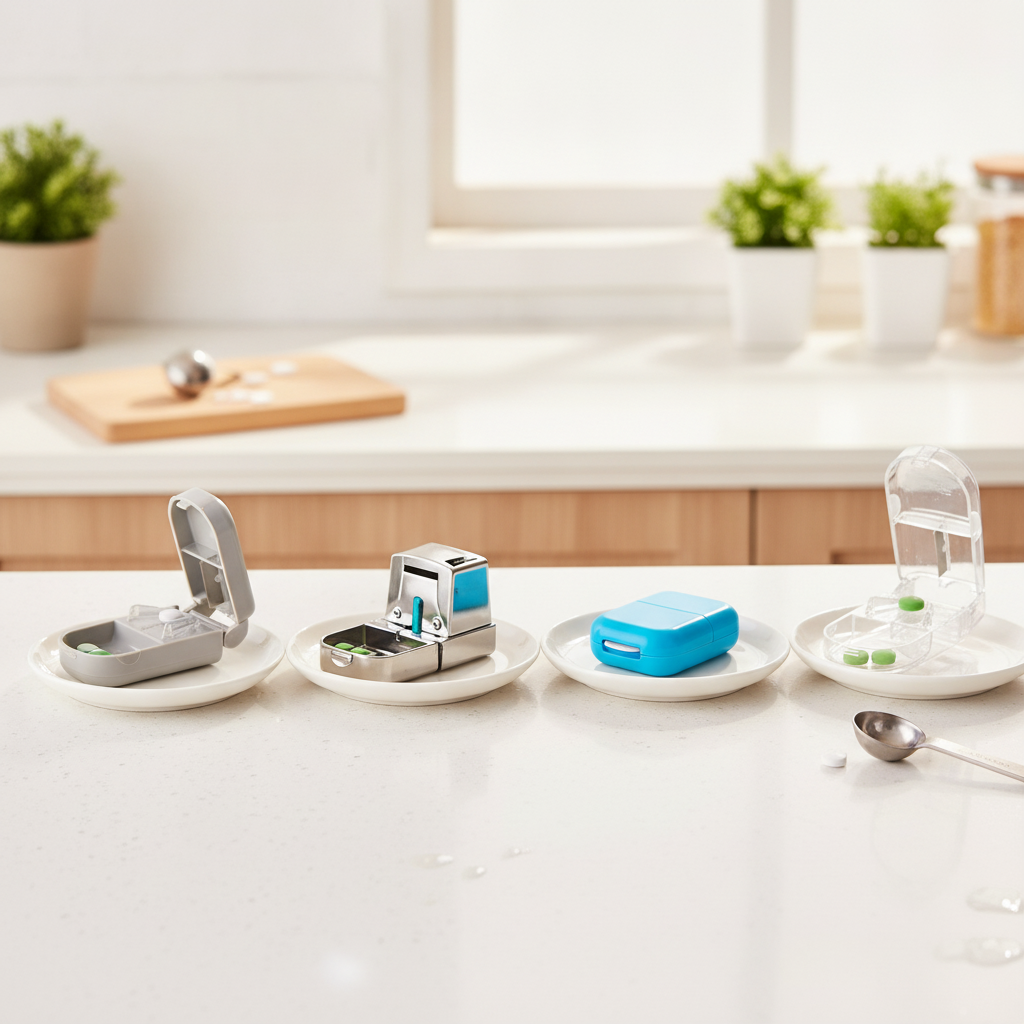
How to choose a pill cutter as a free gift? Comparing four popular pill splitters
TL;DR
A pill cutter may be small, but choosing the wrong one can cause big trouble. Comparing four popular pill splitters, evaluating them from aspects such as material, cutting precision, portability, and ease of cleaning, to help you find the most suitable one.
Key Takeaways
- 切药器的材质和刀片类型直接影响耐用性,ABS塑料配不锈钢刀片是主流,陶瓷刀片更锋利但易碎。
- 切分精度取决于药槽设计和按压结构,带硅胶垫的切药器能有效防止药片滑动,切分更均匀。
- 便携性看体积和密封性,带收纳盒的切药器适合旅行,简易款适合家用。
- 清洁难度与是否可拆卸有关,可拆卸刀片的切药器更容易清洗,避免药粉残留。
A pill cutter is often overlooked as a free gift, but it's actually quite necessary for daily pill splitting and cutting. This article compares four popular pill cutters, evaluating them from aspects such as material, cutting precision, portability, and ease of cleaning, to help you find the most suitable one.
A pill cutter may seem unremarkable at first glance, but the moment you actually need to split medication, its quality becomes immediately apparent. Especially for households with elderly individuals managing chronic conditions or those who need precise dosage control, a reliable pill cutter can save a lot of hassle. Today, I'll compare several common pill cutters on the market, looking at material, cutting precision, portability, and ease of cleaning, and also touch on the common pitfalls found in free promotional giveaways.
Let's start with the bottom line: no single model is absolutely perfect; the key is your specific use case. If you're using it at home and prioritize cutting precision, go for one with a storage case. If you travel frequently and need to carry medication with you, choose a compact, portable option. Many pill cutters given as freebies are basic models, but some are surprisingly good—don't dismiss them all outright.
1. Material and Build Quality
The material of a pill cutter directly affects its durability and safety. Common materials on the market include ABS plastic, stainless steel blades, and ceramic blades.
Most freebie pill cutters feature an ABS plastic housing with a stainless steel blade—adequate but not premium. If you're buying your own, look for food-grade material certification for extra peace of mind.
2. Cutting Precision
Cutting precision is the core metric, especially for medications that require exact dosing. Key factors affecting precision include:
In real-world testing, cutters with silicone pads deliver noticeably higher precision, as pills are less likely to shift. Simple V-slot designs, on the other hand, tend to let round pills slide, producing uneven halves.
3. Portability
If you need to carry it with you, portability matters.
Freebie pill cutters are often simple models without a pill box, but their small size means they won't take up much room in your bag.
4. Ease of Cleaning
Pill cutters tend to accumulate powder residue, and improper cleaning can contaminate the next batch of medication.
I'd recommend choosing a detachable model—just rinse it under water or wipe it with an alcohol swab. Just be sure to store the blade safely after removal to avoid cuts.
5. Brand and Price
Prices for pill cutters on the market range from a few yuan to dozens of yuan. Expensive doesn't always mean better, but extremely cheap ones may have material issues.
Most freebie pill cutters are basic models, but if they're brand-customized, quality is usually assured. For example, I've seen a promotional pill cutter with a frosted plastic shell and a ceramic blade that cut cleanly—better than many 10-plus-yuan options on the market.
6. The Pitfalls and Surprises of Freebie Pill Cutters
Speaking of freebies, I have to mention those pill cutters included with other products. Some are genuinely useless, but others are unexpectedly good.
So, when you receive a freebie pill cutter, don't toss it right away—try it first. If it works well, you've saved some money; if not, you can always buy your own.
7. Real-World Usage Experience
I did a quick comparison of several pill cutters I have on hand. Here are my actual impressions.
8. How to Choose? Recommendations by Scenario
9. Pill Cutter Usage Tips
10. More on Freebie Pill Cutters
Many people assume freebies are all "useless," but the pill cutter is actually a pretty practical giveaway. I've seen numerous brands include pill cutters as promotional items—when you buy health supplements, calcium tablets, or vitamins, a pill cutter often comes along. These usually bear the brand logo, and quality varies, but most are functional.
If the freebie pill cutter you receive isn't great, don't throw it away immediately—see if you can modify it. For instance, if the blade is dull, try sanding it with fine sandpaper; if the shell has burrs, file them down with a nail file. If all else fails, buying a new one isn't expensive anyway.
11. Summary
A pill cutter may be small, but choosing the right one saves a lot of trouble. Looking at the four dimensions of material, precision, portability, and cleaning, models with silicone pads and detachable blades perform best overall. Freebie pill cutters are worth trying first—switch only if they don't meet your needs. One final reminder: the pill cutter is just a tool; medication safety is the real priority. Before splitting any medication, always consult your doctor or pharmacist to confirm it's safe to cut.
If you're considering getting a pill cutter, check out our store's promotional items—for example, the Green Knight Long-Lasting Wet Wipes and Long-Lasting Condoms come with a randomly included pill cutter that might surprise you. For more on real-world experiences with freebie pill cutters, you can also refer to this article: Real Experience After Using a Freebie Pill Cutter for Over Half a Year, which offers more detailed feedback.
常见问题
Q1.Can a pill cutter split all types of pills?
Not all pills can be split. Special dosage forms such as extended-release tablets, enteric-coated tablets, and capsules should not be split, as this can affect efficacy or increase side effects. Regular tablets can be split, but it is best to consult a doctor or pharmacist before doing so.
Q2.How should a pill cutter be cleaned?
Prioritize a detachable pill cutter. After removing the blade and the pill slot, rinse them with clean water or wipe them with alcohol wipes, then let them dry before reassembling. For one-piece pill cutters, where powder can easily hide in crevices, use a cotton swab dipped in alcohol to clean them.
Q3.What should I do if the pill cutter splits pills unevenly?
If the split is uneven, it may be because the pill was not secured properly, or the blade is dull. Try a pill cutter with a silicone pad, which can hold the pill in place. If the blade is dull, replace or sharpen it promptly.
Q4.Is the quality of free promotional pill cutters reliable?
The quality of free promotional pill cutters varies, but many brand-customized giveaways are of good quality. After receiving one, test it first. If it splits pills well and is made of safe materials, you can use it with confidence. If it does not work well, buying one yourself is not expensive.
Q5.Can a pill cutter be taken on a plane?
Pill cutters can generally be taken on a plane, but it is recommended to place them in checked luggage, as the blade may be considered a dangerous item. If carrying it in hand luggage, it is best to choose a model without a blade or consult the airline in advance.